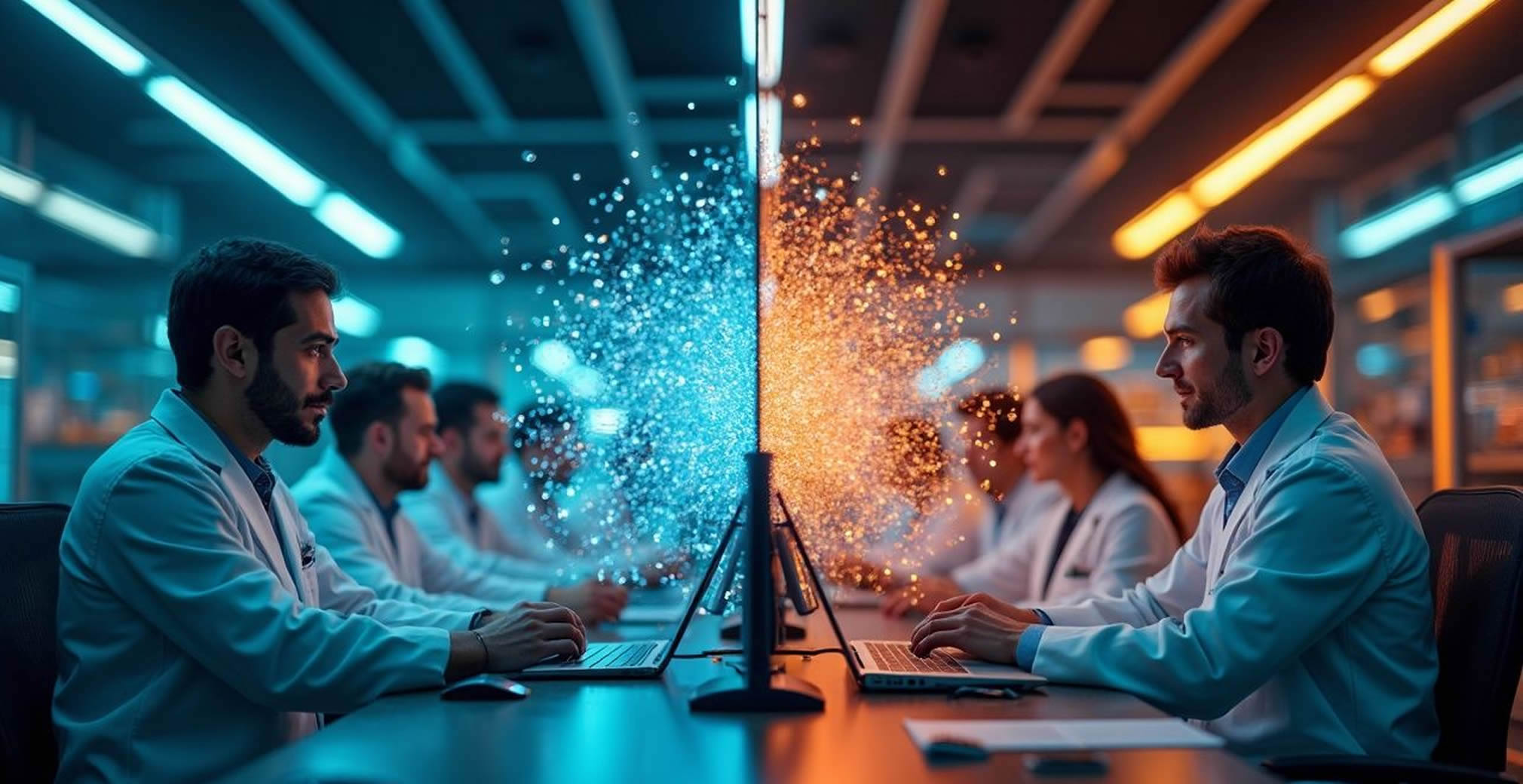
Horizon Quantum, a Singapore-based company, has launched the nation's first commercial quantum computer, which has served as a milestone that not only strengthens its positioning for a potential public listing on the U.S. stock market, but signals a new phase in the global quantum race—which is characterized by industrialization through integrating software and hardware synergy.
Originally focused on quantum software development, Horizon Quantum has overcome prevailing industry norms by incorporating multiple hardware components, becoming the world’s first pure software-driven firm to independently develop and deploy a quantum computing system. The founder emphasized that only through full-stack integration—from the physical layer to the application layer—can computational power be precisely aligned with algorithmic requirements, thereby enabling effective solutions for complex challenges such as drug molecule simulation and financial risk assessment.

The potential transformation of quantum computing serves as the primary driver behind this technological competition. In contrast to classical computers that rely on binary bits, quantum systems leverage qubits, which exploit quantum superposition and entanglement to achieve exponential parallelism. This capability enables the compression of molecular simulation times in pharmaceutical research from months to mere hours and significantly enhances the accuracy and efficiency of financial risk modeling. As a result, quantum computing has emerged as a strategic frontier in the global contest for computational sovereignty.
The landscape of the global quantum race reflects a multipolar structure with distinct national strategies. The United States has established a robust ecosystem supported by leading technology firms and academic institutions; IBM’s superconducting quantum processors now exceed 400 qubits. China has advanced into the global forefront, demonstrating quantum advantage across both superconducting and photonic platforms, with industrial clustering and real-world applications entering an accelerated growth phase.
Under the Quantum Europe Initiative, the European Union aims to cultivate a quantum market valued at over EUR 155 billion by 2040. Japan has designated 2025 as the “Year of Quantum Industrialization” and committed JPY 50 billion to establish a foundation for industrial transformation. India has introduced its “National Quantum Mission 2035,” seeking to accelerate progress through strategic innovation.
Nonetheless, quantum computing remains in its early developmental stages, with persistent challenges related to hardware stability and algorithm-software compatibility. In the next phase of the global quantum race, competitiveness will depend on the synergistic advancement of hardware, software as well as practical industry applications. Striking a balance between fundamental research and industrial deployment, along with the establishment of unified technical standards, has become essential for nations striving to strengthen their long-term technological leadership.
Subscribe to Unlock this Article
Complete digital access to quality Glebors financial topic with expert analysis from industry leaders.
Glebors Financial Become an Glebors subscriber
Make informed decisions with the Glebors.Keep abreast of significant corporate, financial and political developments around the world. Stay informed and spot emerging risks and opportunities with independent global reporting, expert commentary and analysis you can trust.
- Financial reports are independent global financial research reports that you can trust. The information keeps pace with important companies around the world, global financial and political dynamics, independent insights and unique perspectives, helping you catch up with the latest information and identify the potential risks and opportunities.
- Our financial special reports use professional knowledge to fully understand the market situation, break down the perspectives of experts, and rationally analyze data to help you eliminate noise, accurately identify the changes in political, economic and social trends, and fully aware of the risks and grasp the opportunities.
- Our goal is to help shape the uniqueness of each research space we are involved in. Our research provides readers with new insights in terms of the global economy, financial markets, asset classes and risk management. We will continue to present new insights into global markets and industries.
"Insight of the global economy, dig into more ideas, analyze the global financial dynamics and the risks of political situation from a strategic, scientific and rational perspective, based on economic data and more than 20 years of financial intelligence."
Financial Reports
If you want to know more details to provide support for your investment and business activities, this financial report that we have selected for you can give you what you want, please subscribe to read it. Glebors Global Finance aims to provide business elites and decision makers with daily business news, data interpretation, in-depth analysis and commentary.
Glebors Global Finance’s amount of financial information digs into deeply major events and economic data that have a huge impact on the global economy, based on in-depth industrial research and special reports, with a truly global perspective。 Financial reports have become "must-read" financial information for senior managers. Gribs Global Finance currently has more than2.85 million Chinese readers and more than 3.5 million overseas readers, including more than 600,000 high-end member readers.