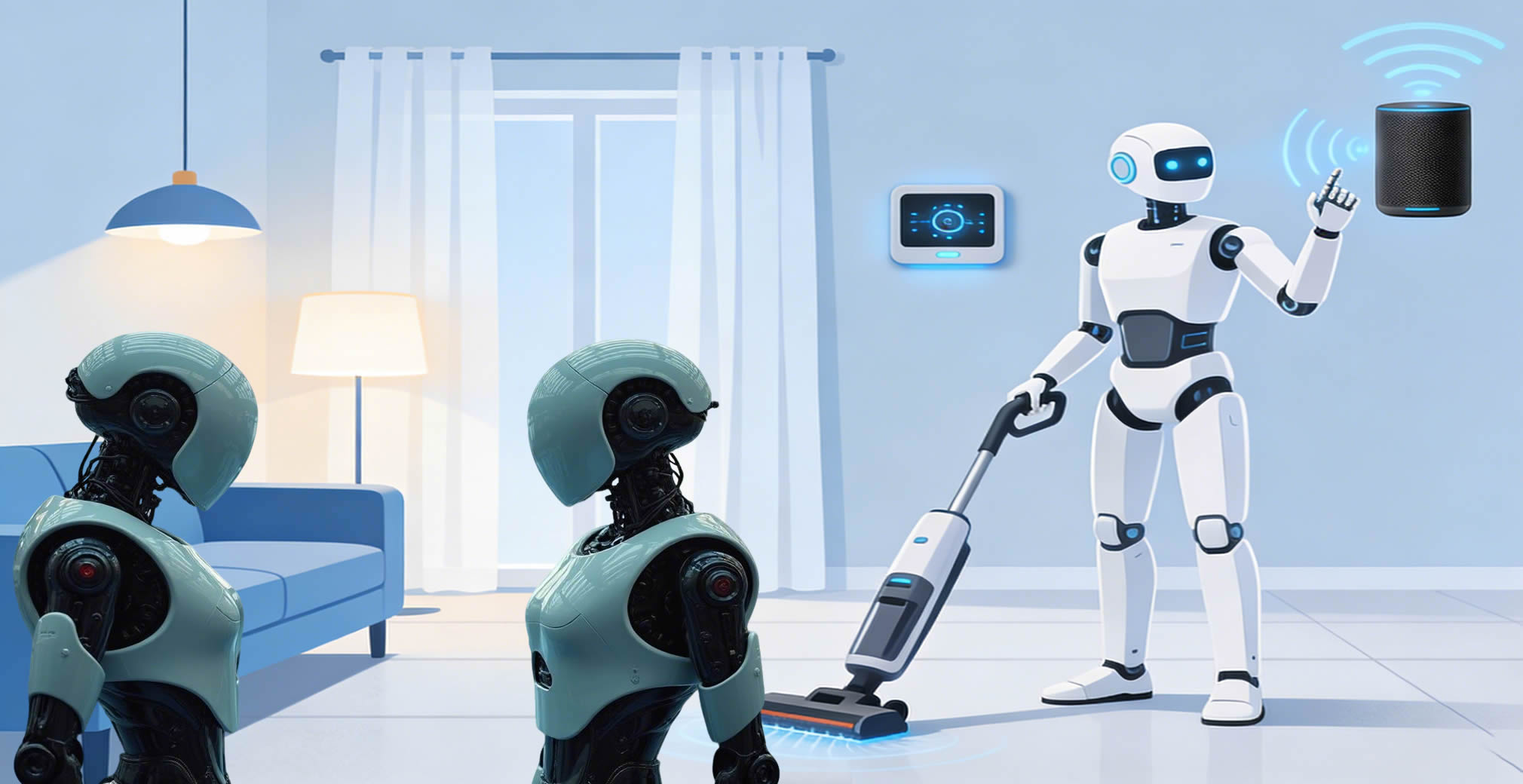
Driven by collaborative breakthroughs in AI, mechanical engineering and materials science, humanoid robots are rapidly moving out of laboratories and evolving from science fiction into real‑world applications globally. Unlike traditional industrial robots, humanoid robots feature a human‑like form and highly flexible limb control, allowing them to seamlessly fit into existing human living and working environments.
They effectively tackle pressing global challenges, including labor shortages, high‑risk operations and uneven distribution of professional resources. In the future, they will deeply integrate into core sectors of human society, extend human capabilities as “all‑round collaborative partners”, and inject sustained momentum into global development.
In the future, humanoid robots will serve as life guardians in extreme environments, undertaking missions in areas once considered “off‑limits to humans”. Harsh scenarios such as polar research, alpine rescue and mountain patrol have long posed severe threats to human safety. The Unitree G1 robot from Hangzhou, China, has successfully completed the world’s first autonomous walking challenge for humanoid robots in an extreme cold environment of -47.4°C in Altay, Xinjiang, walking more than 130,000 steps and significantly breaking the industry’s low‑temperature limit. Atlas, developed by Boston Dynamics of the United States, demonstrates exceptional adaptability to complex terrains such as mountains and ruins, performing high‑intensity movements including climbing and jumping with agility. It has become a key asset for earthquake relief, mountain patrol and other extreme operations in Europe and the United States. Going forward, such humanoid robots will be widely deployed worldwide to comprehensively protect human safety in extreme environments.

In healthcare, humanoid robots will act as intelligent care assistants, effectively easing the global shortage of medical resources. “Fu Xiaozhi F1‑D”, China’s first humanoid medical robot integrated with brain‑computer technology, has provided services to more than 2,000 children with autism, achieving an 80% treatment response rate and opening new possibilities for the diagnosis and treatment of special groups. The “Tashan” hip‑assist exoskeleton developed by Hangzhou Zhiyuan Robotics weighs only 2.7 kg, helping the elderly walk safely and relieving the pressure of elderly care. In Europe and the United States, Germany’s Care‑O‑bot humanoid robot delivers personalized elderly care, monitors health data in real time and connects with medical systems for precise support. The surgical humanoid robot from America’s Intuitive Surgical assists doctors in performing minimally invasive surgeries with high precision, greatly improving efficiency and accuracy and benefiting millions of patients worldwide.
In industrial production, humanoid robots will become highly efficient and versatile operators, powering the intelligent upgrading of global manufacturing. Chinese humanoid robots have been gradually applied in automotive and 3C manufacturing, efficiently supporting flexible production line construction and high‑risk hazard inspection to enhance productivity and quality. Tesla’s Optimus humanoid robot in the United States has entered mass‑production testing, accurately performing parts handling, equipment assembly and other tasks to match the fully automated production needs of Tesla’s gigafactories. Germany’s KUKA humanoid robot excels in precision manufacturing, helping high‑end industries such as aviation and electronics improve product qualification rates, and serving as a major pillar for manufacturing upgrading in Europe and the United States.
In household and public services, humanoid robots will become thoughtful life stewards, continuously improving people’s well‑being worldwide. Chinese humanoid robots will gradually enter ordinary homes, taking on daily chores, child companionship and other tasks to reduce people’s burdens. Similar products are also gaining popularity in Europe and the United States: America’s iRobot humanoid service robots integrate smoothly with smart home systems for full‑house intelligent control. Humanoid robots from Japan and Germany provide multilingual guidance and assistance in shopping malls, airports and other public spaces, while offering personalized support for people with disabilities to help them better integrate into society.
Furthermore, humanoid robots will be widely adopted in global agriculture and scientific exploration. Chinese models can efficiently carry out precise agricultural tasks such as fruit tree pollination and agricultural product sorting, promoting agricultural modernization. European and American counterparts play important roles in deep‑sea and space exploration, supporting humanity’s journey into the unknown. It is important to emphasize that the core value of humanoid robots is not to replace humans, but to collaborate with them, enabling people to focus on more creative and meaningful work. With global technological progress and declining manufacturing costs, humanoid robots will spread across borders and become widely accessible, officially ushering in a bright new era of human‑machine collaboration and symbiosis worldwide.
Subscribe to Unlock this Article
Complete digital access to quality Glebors financial topic with expert analysis from industry leaders.
Glebors Financial Become an Glebors subscriber
Make informed decisions with the Glebors.Keep abreast of significant corporate, financial and political developments around the world. Stay informed and spot emerging risks and opportunities with independent global reporting, expert commentary and analysis you can trust.
- Financial reports are independent global financial research reports that you can trust. The information keeps pace with important companies around the world, global financial and political dynamics, independent insights and unique perspectives, helping you catch up with the latest information and identify the potential risks and opportunities.
- Our financial special reports use professional knowledge to fully understand the market situation, break down the perspectives of experts, and rationally analyze data to help you eliminate noise, accurately identify the changes in political, economic and social trends, and fully aware of the risks and grasp the opportunities.
- Our goal is to help shape the uniqueness of each research space we are involved in. Our research provides readers with new insights in terms of the global economy, financial markets, asset classes and risk management. We will continue to present new insights into global markets and industries.
"Insight of the global economy, dig into more ideas, analyze the global financial dynamics and the risks of political situation from a strategic, scientific and rational perspective, based on economic data and more than 20 years of financial intelligence."
Financial Reports
If you want to know more details to provide support for your investment and business activities, this financial report that we have selected for you can give you what you want, please subscribe to read it. Glebors Global Finance aims to provide business elites and decision makers with daily business news, data interpretation, in-depth analysis and commentary.
Glebors Global Finance’s amount of financial information digs into deeply major events and economic data that have a huge impact on the global economy, based on in-depth industrial research and special reports, with a truly global perspective。 Financial reports have become "must-read" financial information for senior managers. Gribs Global Finance currently has more than2.85 million Chinese readers and more than 3.5 million overseas readers, including more than 600,000 high-end member readers.